So what have you been doing in radio this week?

We hear this question every week on the net. This was an easy one  for John KK4ITX, who just completed building a Moxon antenna.

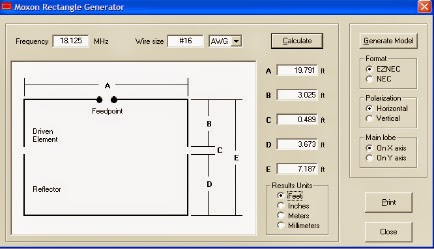
So what is a Moxon, and how much moxie do you need to put one together? For starters, the Moxon is basically a two element antenna, with one driven and one reflector section. The unique feature is that the ends of both sections are bent in toward each other forming a rectangle with a gap where two of the sides of a rectangle would normally join. A diagram should help. And yes, there is a computer program to help you with the dimensions, which depend on the band you are designing for. More on that later.
This is what John’s Moxon looks like.

The Moxon can be mounted either vertically or horizontally.
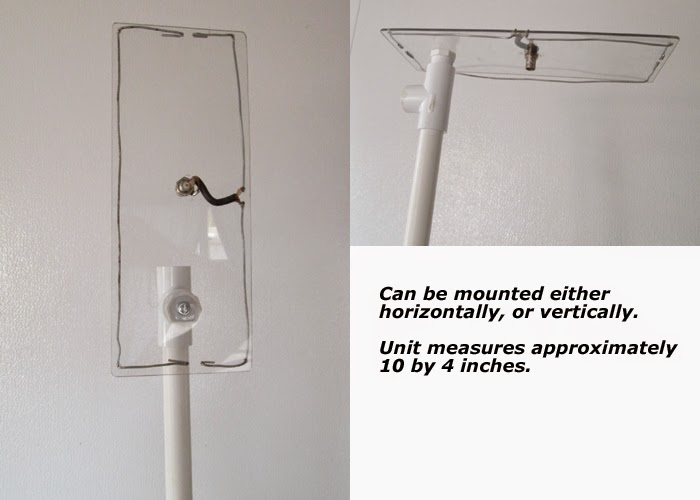
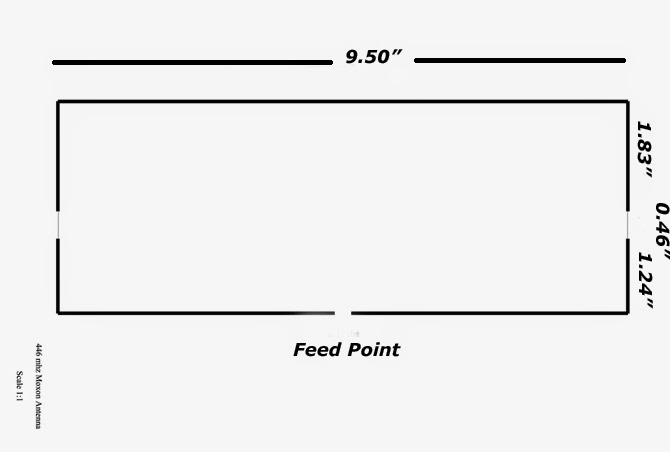
Looks pretty simple, stealthy, and compact. John’s 440 measures less than 10 – inches in its long dimension. Here are the numbers he used.

This is not the best place to go into all the details, but the following link will provide the information you will need to get started. And yes, you will find the software needed to design your very own there as well.

 http://moxonantennaproject.com/index.html

 
So, what have you been doing in radio this week? Please take the time to share with others. That’s a key part of calling yourself a ham. Hope to hear from you soon.
And once again, thank you John KK4ITX. John’s email, should you have questions is: jleahy00@yahoo.com.
New Repeater System In Town

By Ron Smith

I’m a relatively new ham using primarily a Yaesu HT60 and a small mag mount antenna on my car. I am only an occasional user, but am always interested in new, simple ways to communicate with my HT.

Recently, I found the SARnet , a network of linked UHF repeaters , tying into the Florida DOT microwave system and giving even small HT’s statewide repeater coverage. There are close 30 repeaters covering the entire state.

All the information you need is on http://sarnetfl.com, and shows a statewide coverage map, with frequencies, and tones. I believe they all use a +5 offset.

Already, from the Lakeland and Tampa repeaters, I have contacted Chipley, Jacksonville, and tonight monitored Sarasota.

Since it is linked statewide you do have to allow approximately 2-3 second both in keying up, and waiting for a reply.

Try it out and have some fun!

Ron Smith
KK4JEA

Two New Generals

Two new Generals chilling out after passing their exams. Left to right,
VE’s Richard and Glen next to, Bob KM4BAO new General, Janice KM4IEY new General, followed by VE Ron.

Not shown, but also receiving an upgrade to General was Yisrael Freedman, KA4PNE. Yisrael had to leave early, but it will be worth your time to visit his QRZ site http://www.qrz.com/lookup/ka4pne

The following images were taken during the evening. Snapshots by Bill, and Character studies by Sarah.
Click Here

A Southern Fairy Tale

My good friend Ernie KG4YNI once asked if I knew the difference between a Northern and Southern Fairy Tale. I didn’t so he went on to explain. A Northern Fairy Tale starts with “Once upon a time,” but a Southern Fairy Tale begins with “You ani’t never going to believe this.” Well, I have a Southern Fairy Tale with a good ending.
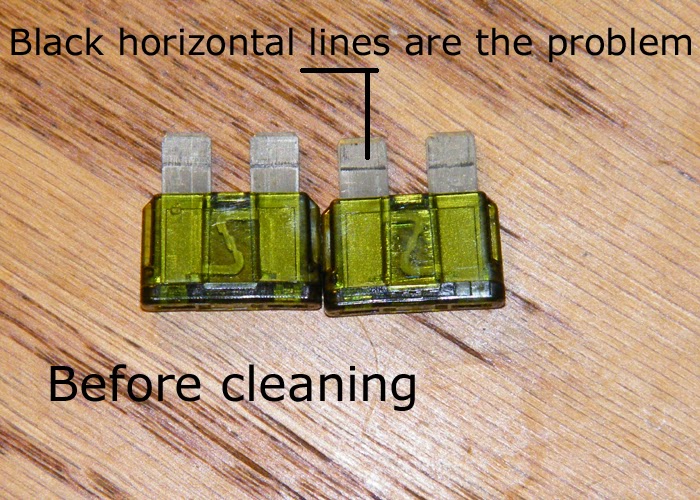
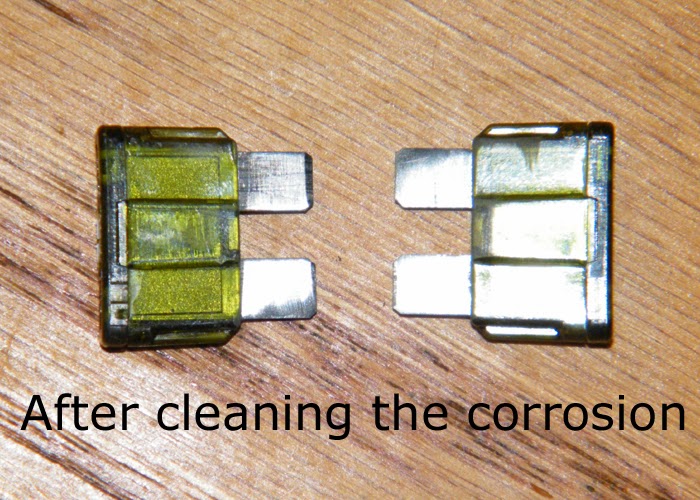
Recently I became concerned about the power my icom 7000 was putting out. Not wanting to believe the power meter on the radio, which clearly did not register full power even though the radio was set to deliver it, I asked Rich if he could help. He brought his Bird watt-meter to my shack, and sure enough, I was getting only 50 watts out when my rig was set for 100 watts on HF, and 25 watts when set for 50 on VHF. Later the next evening, he suggested that I might find the answer by searching Google, which I did. Most of the hits I got were useless or irrelevant, and then I stumbled across an article by AB4OJ suggesting that corrosion on the inline fuses from the power supply to the radio was the culprit. I pulled my fuses, and discovered the same black lines of corrosion that AB4OJ found. See photo below of my fuses before and after cleaning with emery paper.
Bottom line, after cleaning the fuses, I am now able to get a full 100 watts out of my radio. I know what you are thinking. You ain’t going to believe this, but it is true, and something to keep in mind. 

KI4ZMVBill
PS If anyone would like to contribute to the blog with information that you feel we could profit from, please feel free to submit what you have, and I will publish it.